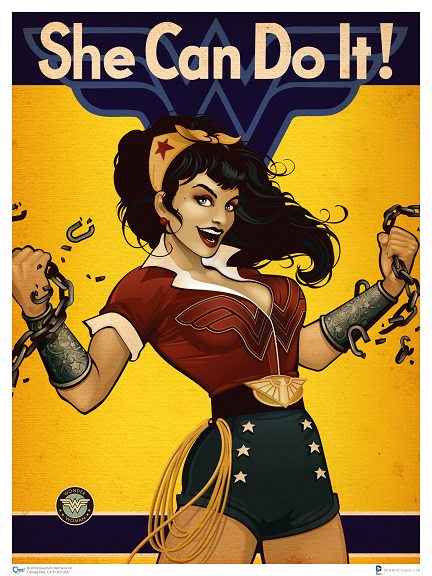
When considering all of the series studied as a whole, one must take into account the collective merits and the flaws of each. While a comic might have had a strong, believable lead, it might also have lacked a female supporting cast. While a comic might have had a plethora of character growth and development, it might also have been limited to “girly” or “female” themes that contributed nothing to the work overall. The majority of the comics studied were overwhelmingly positive, showing most female superheroes as well-developed characters with supporting groups of other female characters, who took part in stories that were character driven rather than gender driven. Characters like Captain Marvel and Wonder Woman presented female superheroes with a blend of power and compassion while characters like Silk and Super Girl presented female superheroes with insecurities and flaws but also the strength to keep doing good despite them. However, while most of the comics had many strong points, almost every one had at least one drawback to it, preventing it from being an entirely positive read.
The most common flaw in the comics studied was the over sexualization of the main characters. While sexualized costumes and art didn’t always decrease the quality of the characters or the plotlines, they were a constant distraction that wouldn’t have existed were the characters male. In certain cases, the hyper-sexual nature of the comic distracted so completely that any building character development was lost. When compared to male counterparts, it is difficult to imagine them put through the same treatment. Would the creators have included an unnecessary sex scene in a Batman comic the way they did with Batwoman or with Catwoman? Would the creators have included an unnecessary amount of detail, showing every curve, in the costume of Wolverine as they did with Storm? Would the creators have shown Superman in an unnecessary shower scene as they did with Starfire or Harley Quinn? This over sexualization takes away from what would be good characters and stories, and in those moments replaces them with pointless objects of lust. This objectification sends the message to readers that female characters are only worth the sum total of their collective parts. The plot, story, and overall character takes second place to the appearance of the hero, which must be designed to fit the gaze of male readership. This lessens the worth of the characters overall, and sends the message to young female readers that even superheroes have to be subject to male-dominated standards of beauty.
The other notable flaw in the comics studied was the lack of female supporting characters. A female character on her own is good, but a female character who is not reliant on male characters and who develops bonds with other female characters is better. Even in a story focusing on one solo hero, most male characters have a support system of other characters that help them grow or drive the plot. It stands to test that female characters should be the same. When a female character relies solely on male characters as support and plot points she loses some of her individuality and independence. In a way, the focus of the story shifts. For example, with Katana, the main plot focused around her, but instead of the comic being about her, her husband and her love interest became the crux of the story. Female characters are capable of driving their own stories and interacting with other females. To lack these things is to limit the character. In turn, this sends the message that female characters are somehow lesser than their male counterparts. It shows that superheroines are out there and exist, but are not only few and far between, but are consistently on their own. This also furthers the concept of female competition, implying that a female character must somehow outperform another female character to prove their worth. In real life, women rely on each other and function with other female support, performing tasks from feats of greatness to everyday life. As figureheads of female power personified, superheroines should, at the very least, reflect this.
It is notable that over all the series examined, Marvel Comics presented female characters in a less objectifying manner than DC Comics. Out of the 10 Marvel series studied, only one dealt with excessive sexuality, and less than half of them lacked supporting female characters. Out of the 11 DC Comics series studied, four were overly sexual, with the majority of the rest prone to less prevalent but still present sexualized positions and art. Conversely, almost all of the DC Comics series provided the main character with a strong female supporting cast.
For years, there have been many issues facing female characters in comic books, from violence, to objectification, to a lack of character development. However, within the last four years, comics from both DC and Marvel have seen a positive trend in the presentation and growth of female superheroes. Despite their inception very likely starting out with the intent to boost sales, female characters have grown and changed into an integral part of any published universe. Costumes and rolls are changing to personify women rather than objectify them, whether it’s Captain Marvel taking lead of the Avengers or Wonder Woman donning pants for the first time in 40 years. Female characters are becoming more than just money magnets, sending generally positive messages to readers that women can not only be heroes, but believable characters with a detailed stories and human flaws. While there are still improvements to be made, the current comic climate seems to be growing towards a more inclusive future where superheroines are taken out of the fridge, and are portrayed as the heroes they are – not just pinups.